On this page
Amigram Beta 0.5 is available for AmigaOS, MorphOS and AROS. I have released a new version of my unofficial Telegram client, written in C and based on MTProto: after the first beta come forum topics, message search, stickers and more ways to manage conversations.
The program remains free, needs an existing Telegram account and is neither developed nor endorsed by Telegram. Version 0.5 is distributed under GNU GPL version 3 or later.
Topics, search and the Archive
In groups organised as forums, Amigram displays topics in a separate list. Open General or choose a topic: messages, replies, attachments and polls stay in the selected topic. The list shows details including the latest message and unread counts. Creating, renaming and closing topics is not yet available in the client.
Search can now find messages in the open chat or across chats and jump to the selected message. The release also adds an Archive synchronised with Telegram, a pinned-message bar, and synchronised read and mute states.
Stickers and a WebP datatype
Stickers can be displayed as still images through a WebP datatype: animated and video stickers show a static frame, not animation. If the datatype is missing or cannot decode the image, the associated emoji remains visible.
For AmigaOS 3, AmigaOS 4 and MorphOS I developed a dedicated WebP datatype. It is not bundled with Amigram: when needed, the client can offer to install it on request, downloading the files and checking their SHA-256 hashes. AROS already has a WebP datatype. AmigaOS 3 needs picture.datatype V43 or later; the other systems need a compatible datatype installed. Sticker pictures also require inline photos and are off by default on 68k processors below the 68040.
Messages, polls and automation
Version 0.5 adds creation of polls and quizzes, synchronised drafts, formatting and spoilers. Links hidden behind words also reveal their address, photos sent together can form an album, and several files or messages can be selected. Timed mute and choices for pinning or deleting messages are available according to the chat type.
An ARexx port lets scripts control the client, while a panel brings settings together. The update notice checks configured channels but does not download or install updates. The text client gains commands such as /topics, /topic and /find.
Download: seven packages
Each row links to the Aminet page and LHA archive, plus the official GitHub release and ZIP:
| Platform | Aminet 0.5 | GitHub 0.5 |
|---|---|---|
| AmigaOS 3.x (68020+) | Aminet / LHA | GitHub / ZIP |
| AmigaOS 3.x (68000, text only) | Aminet / LHA | GitHub / ZIP |
| AmigaOS 4.x (PPC) | Aminet / LHA | GitHub / ZIP |
| MorphOS (PPC) | Aminet / LHA | GitHub / ZIP |
| AROS i386 (ABIv0) | Aminet / LHA | GitHub / ZIP |
| AROS x86_64 | Aminet / LHA | GitHub / ZIP |
| AROS ARM64 (Raspberry Pi) | Aminet / LHA | GitHub / ZIP |
The AmigaOS 3 GUI requires at least a 68020 and about 4 MB of free RAM, including 1.5 MB contiguous. The plain-68000 package is text-only and needs about 2 MB free; its first login requires a faster Amiga or an emulator. Thanks to Paolo Arus, DaRkHoRaCe, for repeated A600 testing.
AROS i386 uses ABIv0; the x86_64 build needs a system matching the current SDK, while ARM64 targets supported native Raspberry Pi 4, 400 and 5 images. Requirements and instructions are in the release README.
A step forward, not a complete client
The beta also fixes chat updates, reply display, formatting and memory issues on 68k. Limitations remain, including audio and video playback and some downloads from Telegram’s CDN. The Amigram development diary follows the project.
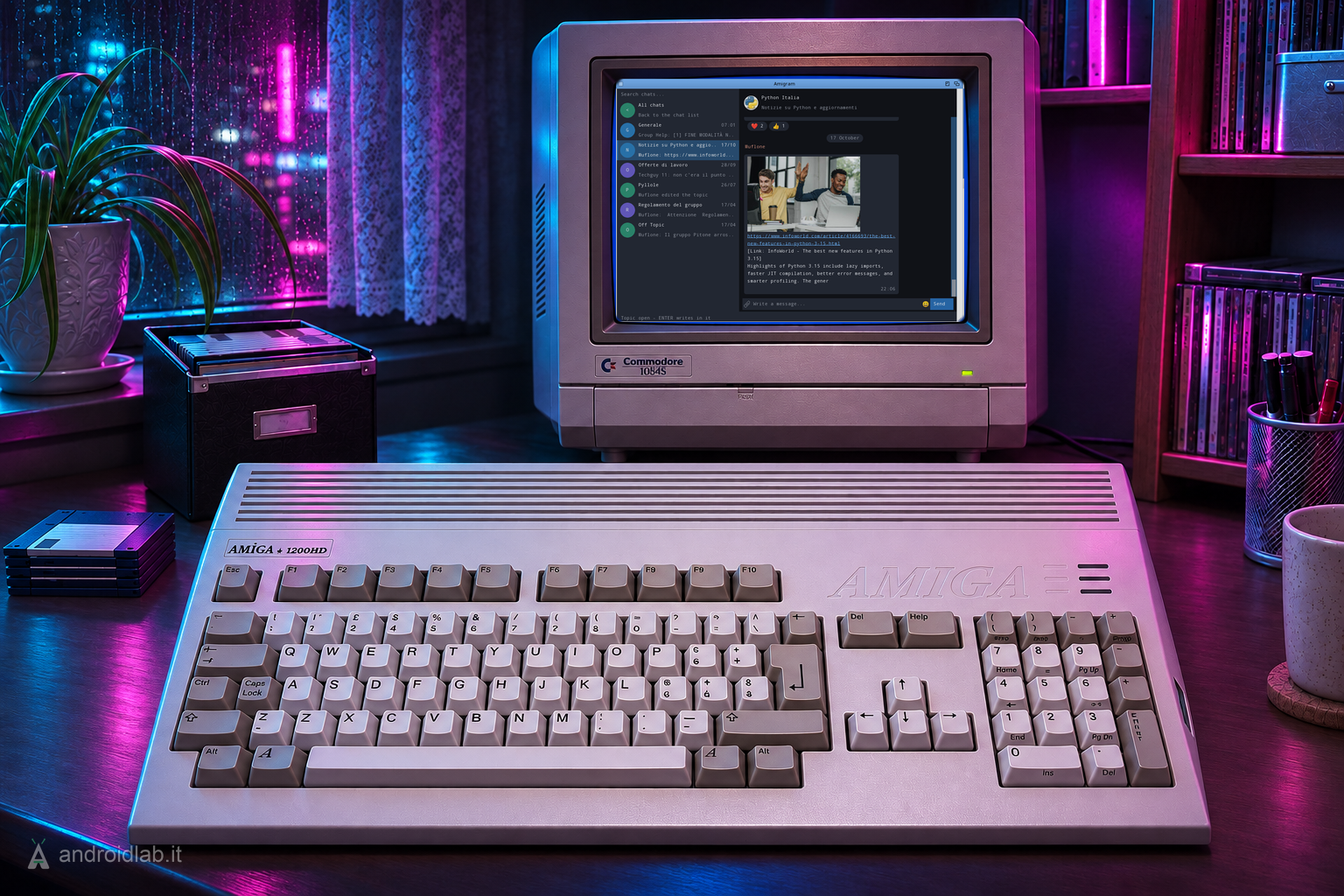
AI-generated cover illustration; hardware shape reference: photograph by David J, CC BY 2.0, and photograph by Adam Podstawczyński, CC BY 4.0. The monitor contains a project screenshot on MorphOS: the cover is a composite, not a photograph of the app running on the A1200.


